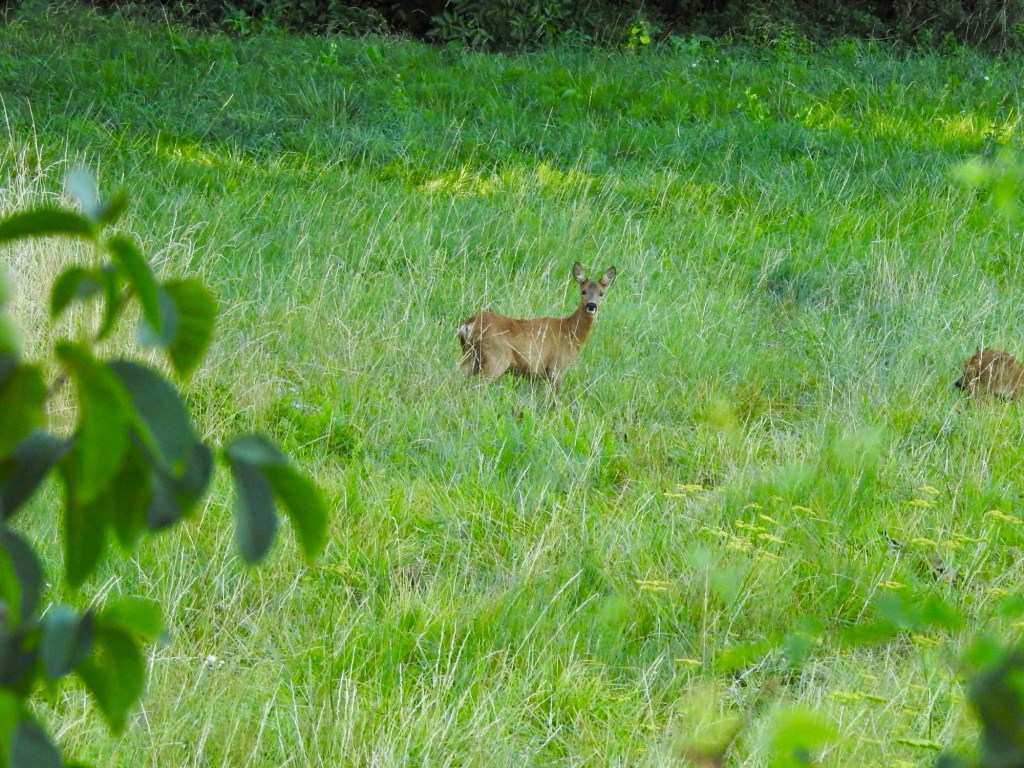
Initially, seeing wild deer while cycle touring was a novelty; now we spot them almost daily in open fields on the edge of towns or in the deeply shaded forests of rural France. Pheasants, quail, jackrabbits, and squirrels, are out here too, in abundance.
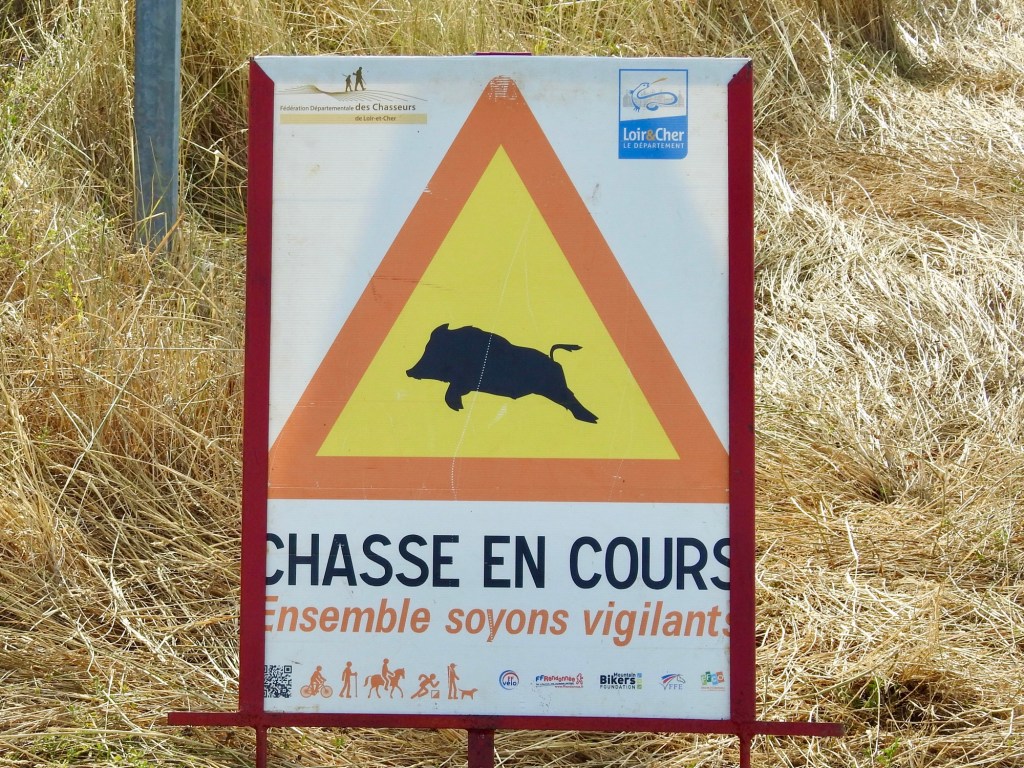
At intervals along the cycle trail between La Charité and Pouilly Sur Loire, in the midst of an unexpected early-morning thunderstorm, sandwich-board-style signs appear, claiming today is ‘jour de chasse,’ hunting day in English. Dressed to kill, earnest men with snarling dogs are setting off for the hunt. In the near distance comes the muffled sound of shotgun blasts.
Ahead of us a startled young spotted fawn breaks cover scrambling up the embankment and across the trail, while a foolhardy jackrabbit hops the length of the path without deviating.
The dates for hunting season vary across France’s 96 administrative departments, depending upon the species being hunted. Of course, no one bothers to alert the animals being stalked when the ‘hunt is on’; alas there is no solidarity amongst animal species. Dogs, falcons and ferrets are enlisted to run down boar, pheasant, or rabbit. I suspect the animals being hunted are instinctively aware of what’s happening, making themselves as elusive as possible which in turn only serves to excite and challenge the hunters as they move in for the kill.
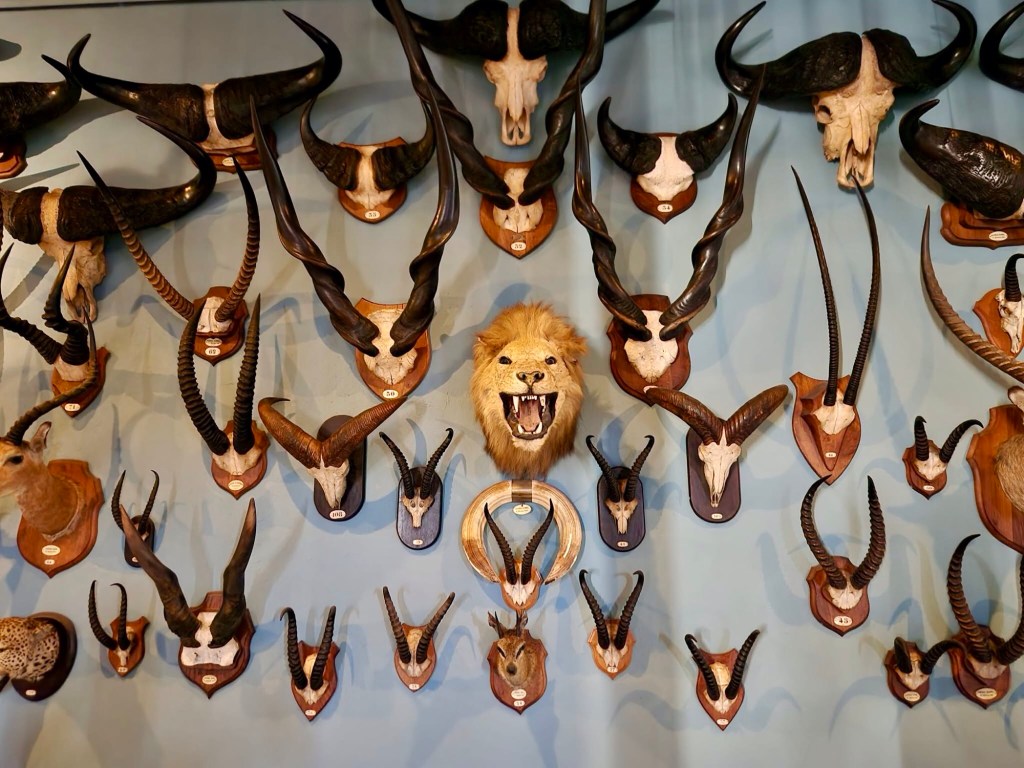
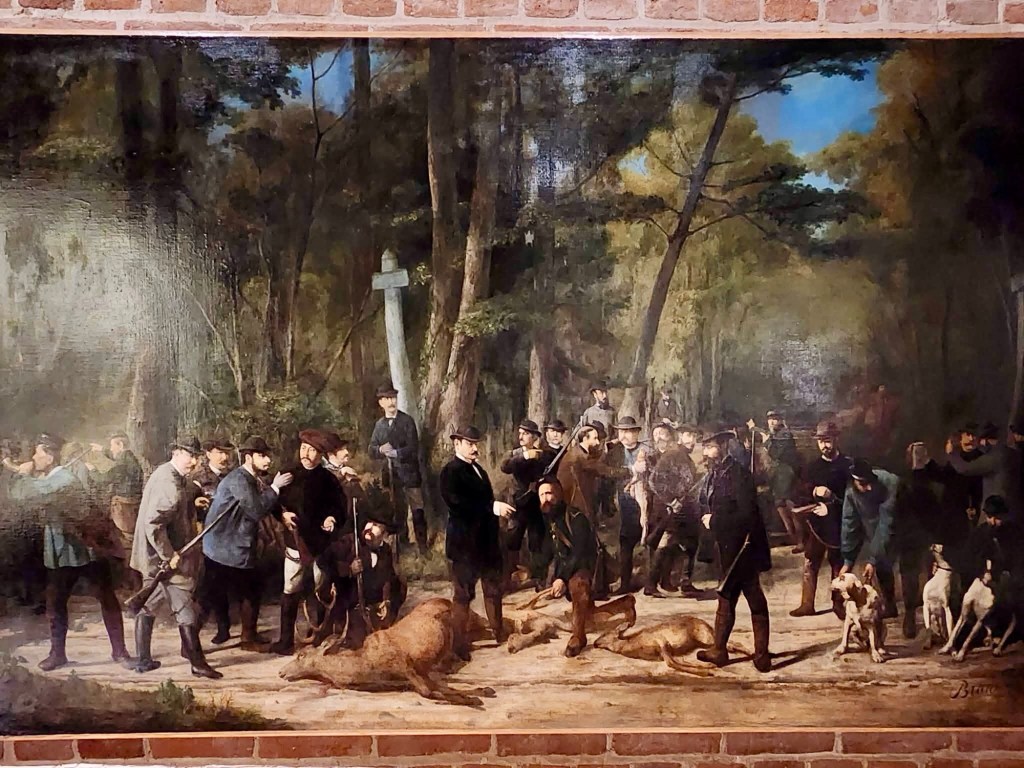
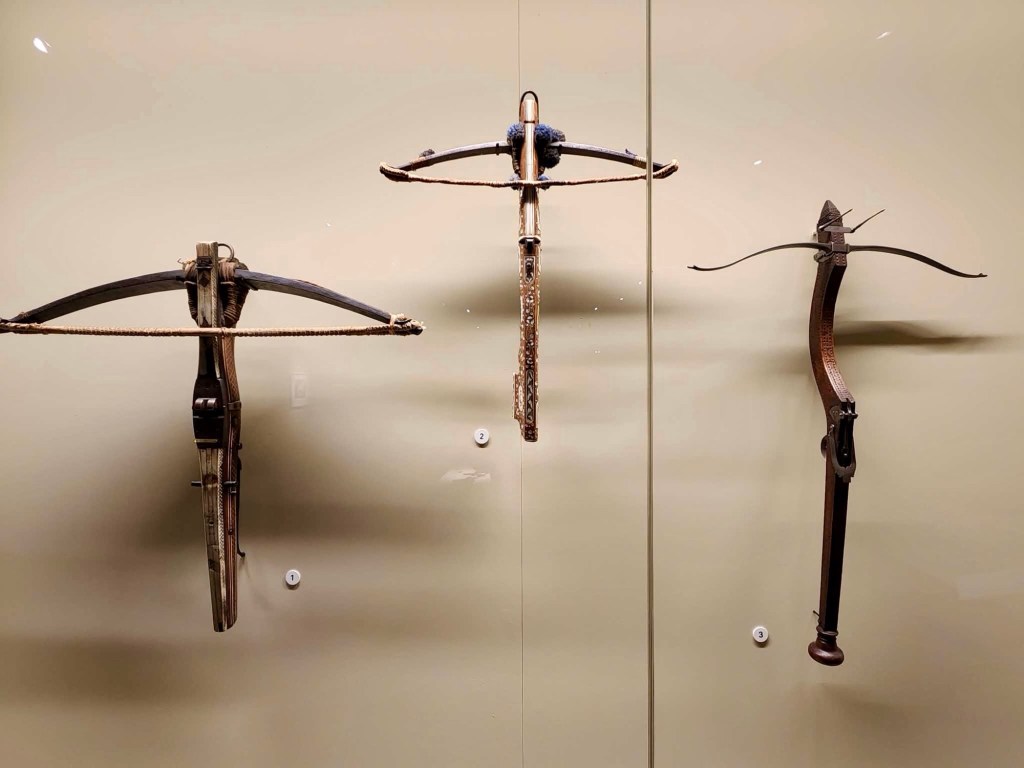
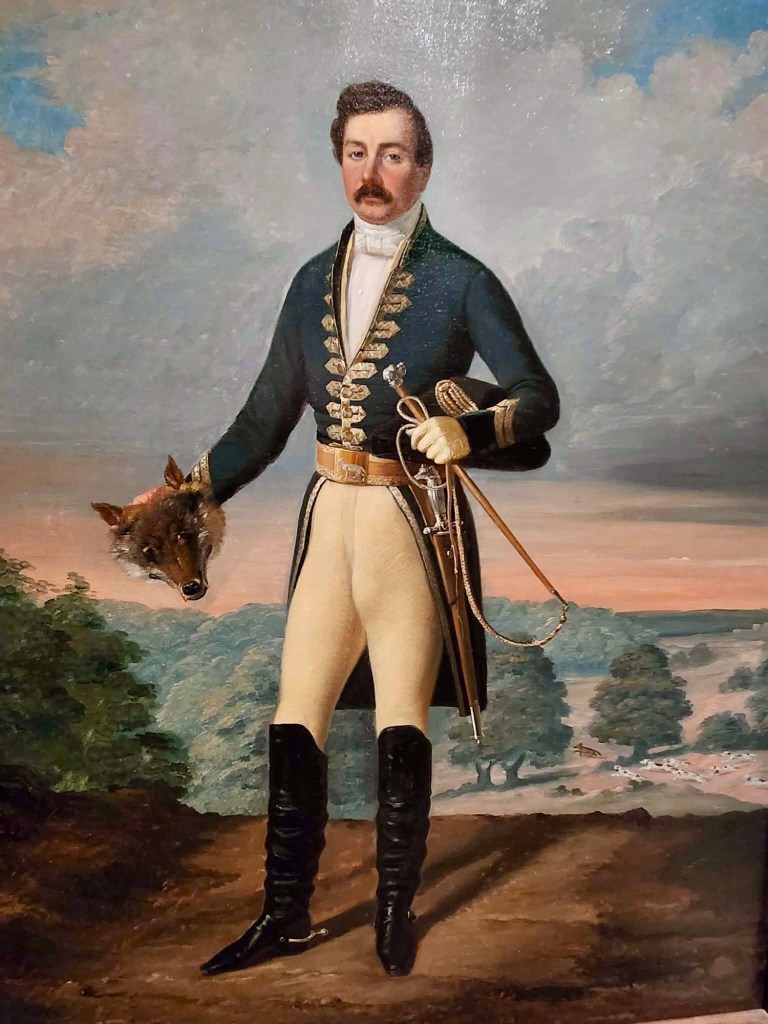
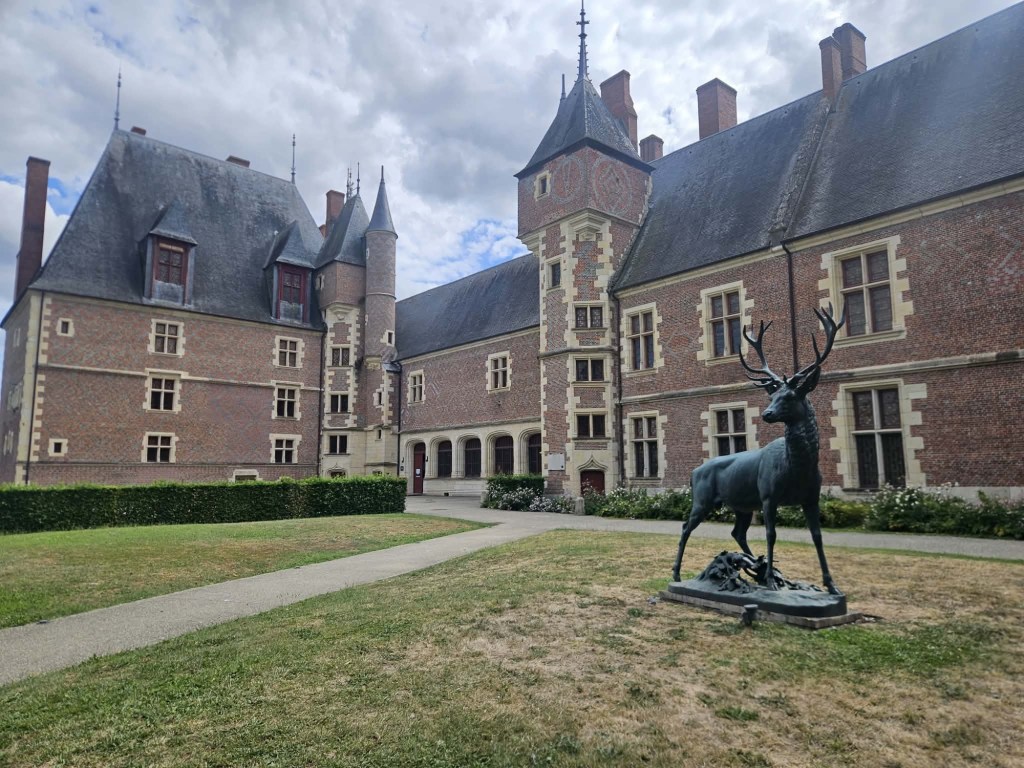
In the medieval town of Gien, on the Loire River, the ‘Museum of the Hunt’ is housed within a beautifully restored 15th-century Renaissance castle. It bursts with a compelling but frightening range of curious exhibits: creepy taxidermy animals, antique guns, snares, traps, hunting equipment, outfits, and accessories. I imagine it’s not a real hobby if you can’t cosplay a little. The Museum walls are festooned with trophies grand stylised paintings and tapestries of nobility displaying their prowess on hunting parties, with dead beasts lying at their feet. Looking at this unsettling historical display of hunting through the ages, men are depicted as heroic figures hunting for prestige, manliness or fun rather than for food alone. There’s a casual brutality on display throughout the museum that I find unsettling. It’s as if these spectacular and beautiful creatures only ever existed to serve the vain fancies of men.
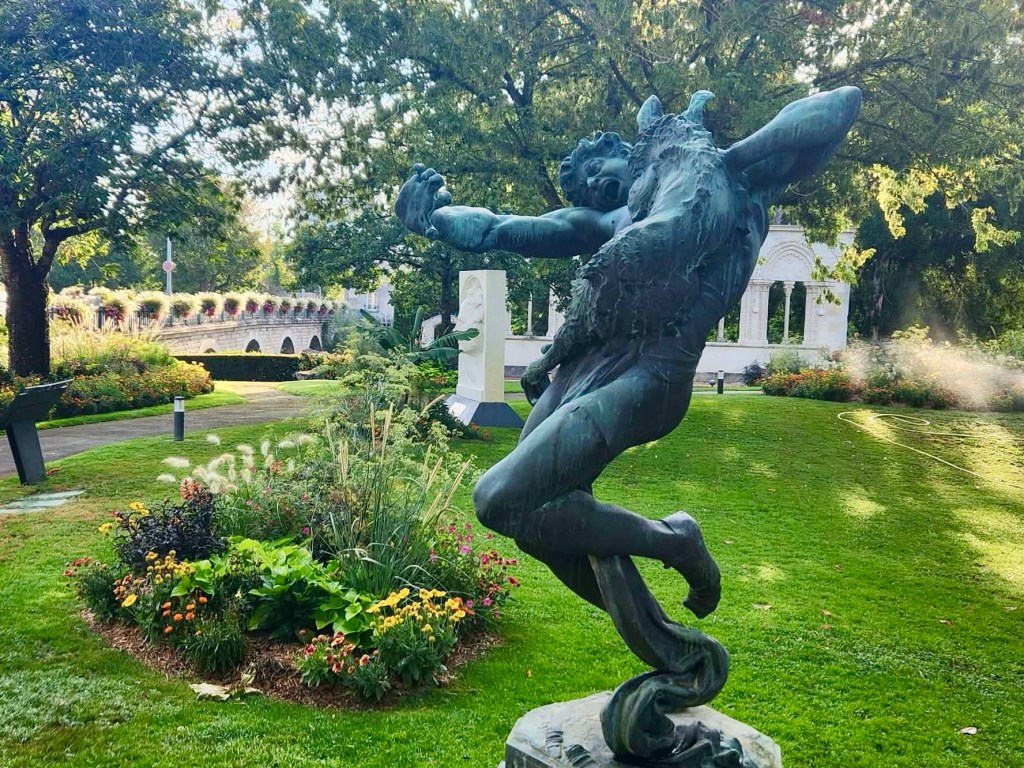
Sometimes animals do fight back, leaving Gien, we cycled into the beautiful, Venice-inspired, canal city of Montargis, to discover the statue comerating the legend of the Dog of Montargis. In 1371, during the reign of King Charles V, a Knight named Aubry was murdered in a local forest. Aubry’s loyal dog, was found mourning over his shallow grave. Suspicion fell on a rival Knight, Robert Macaire. King Charles ordered a trial by combat between Macaire, armed with a club, and Aubrey’s grieving dog. The dog leapt at Macaire knocking him to the ground, forcing him to cry out for mercy and confess to the murder, he was subsequently hanged. I guess, every dog has its day.
As an infrequent fisherman, who went rabbiting as a kid, I’m conflicted about hunting. I appreciate there’s a rich cultural history, skill set and raw honesty associated with catching your own food, but the idea of killing as a ‘recreational activity’ leaves me feeling a little queasy, However, with the exorbitant price of fresh meat in France, hunting is a viable, if not necessary, option for many.
I do enjoy hunting wildlife, the weapon of choice is my trusty Nikon Camera.





I would love a bit of venison.
LikeLike
Loving it Nick, hope you are enjoying as much as I am. Rock on.
LikeLike