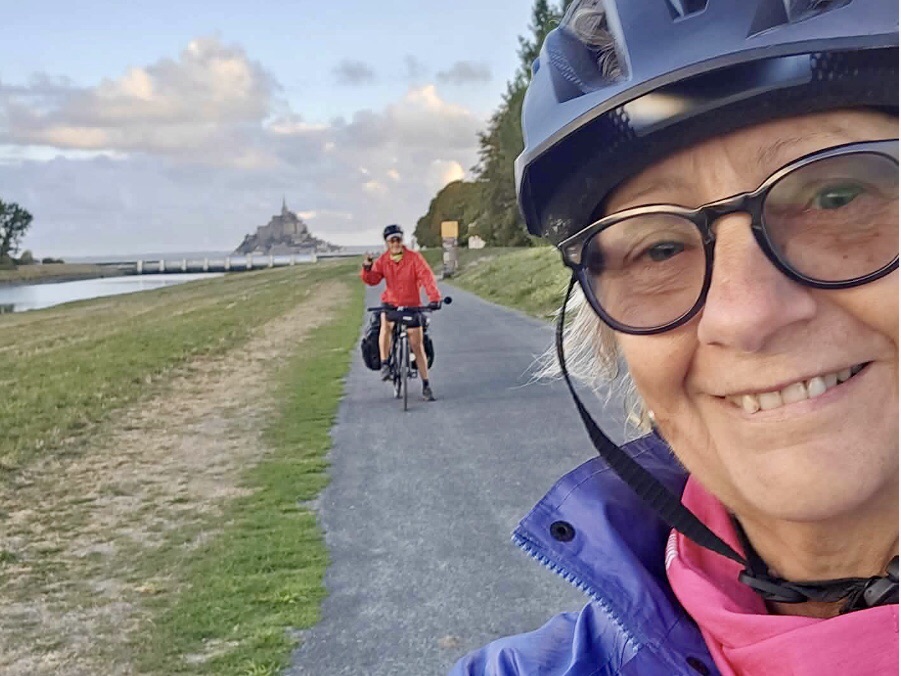
Cycling on the rustic Velomaritime Cycle Route between Mont Saint-Michel and Saint-Malo. Just before the township of Cancale, with its autumn fields bursting with vivid green cabbages, Dutch-style windmills and seaside oyster shops, we left the Normandy Coast and entered the region of Brittany, but not before buying eggs from a local farm stall then scoffing down huge, sweet, purple figs fresh off a tree hanging from a walled garden.
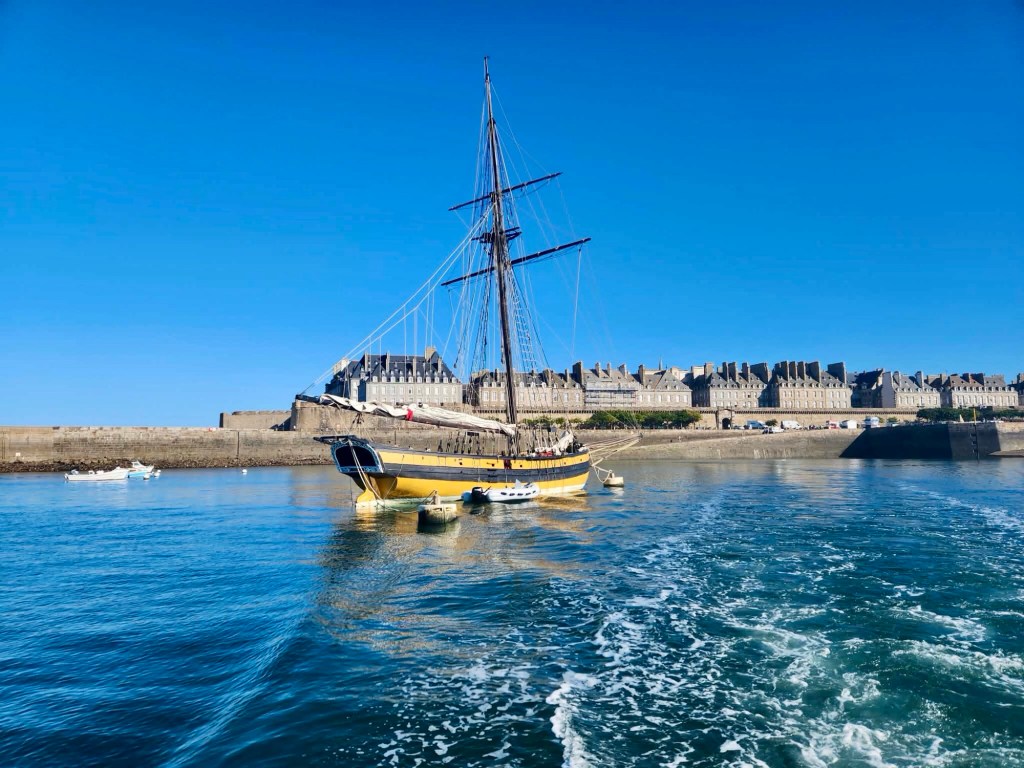
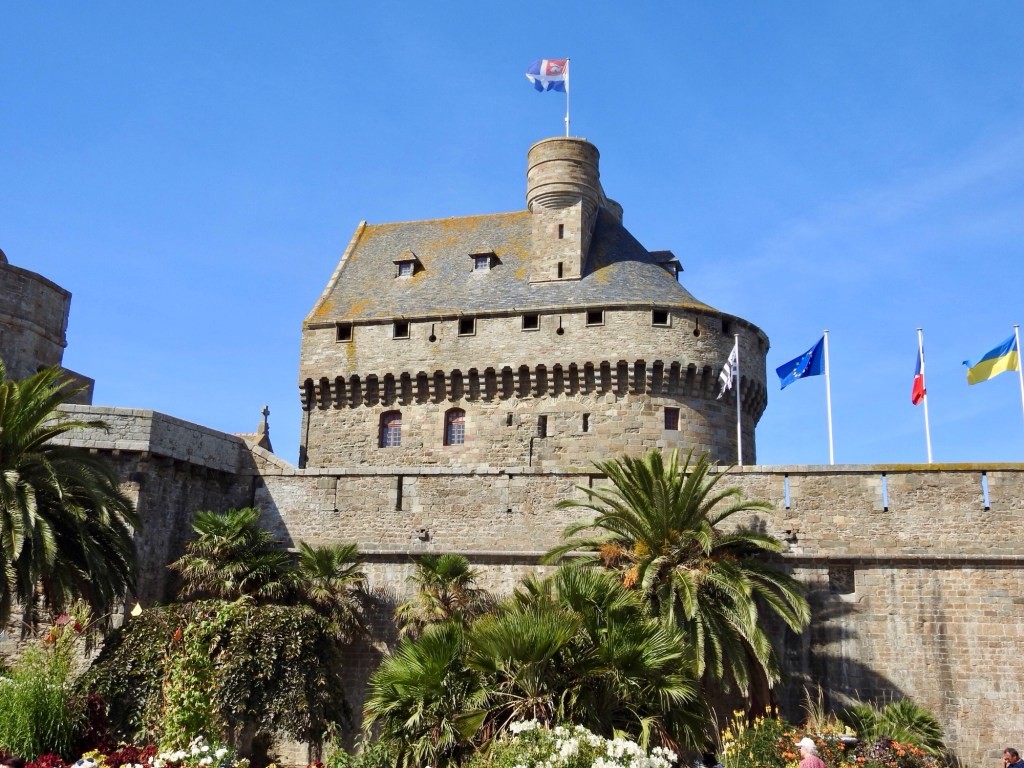
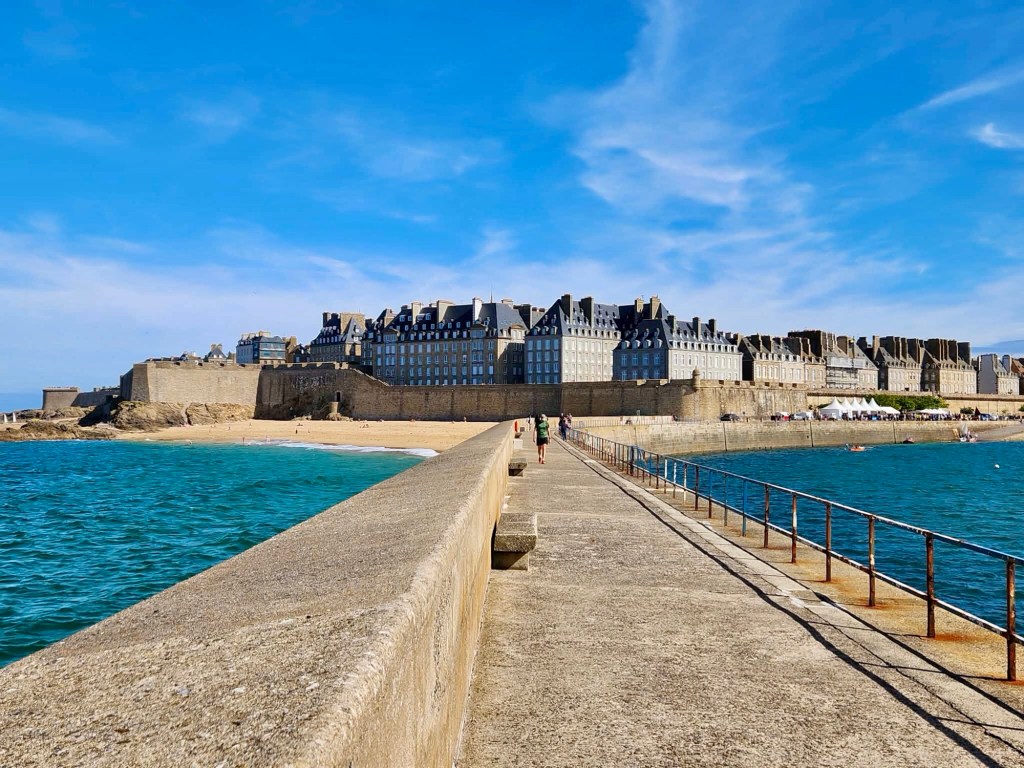
The establishment of Saint Malo follows a familiar pattern in this seafaring part of the world. Starting as a Roman settlement over 2000 years ago, then, in the 6th century, Welsh monks established a Monastery, later in the 12th Century. The town grew from a pirate-infested fishing and trading port, into a walled island fortress. The defences grew more sophisticated and formidable over time, staving off repeated sieges from the Vikings, English, Dutch, Corsairs and pirates.
I am all a quiver with anticipation cycling into Saint-Malo, having been swept away by the wildly successful Pulitzer Prize-winning historical fiction novel ‘All the Light You Cannot See’ written by American author Anthony Doerr. The novel is set in Saint-Malo during World War II and the German occupation of the City, however, I was soon to discover that historical fiction is no substitute for historical reality.
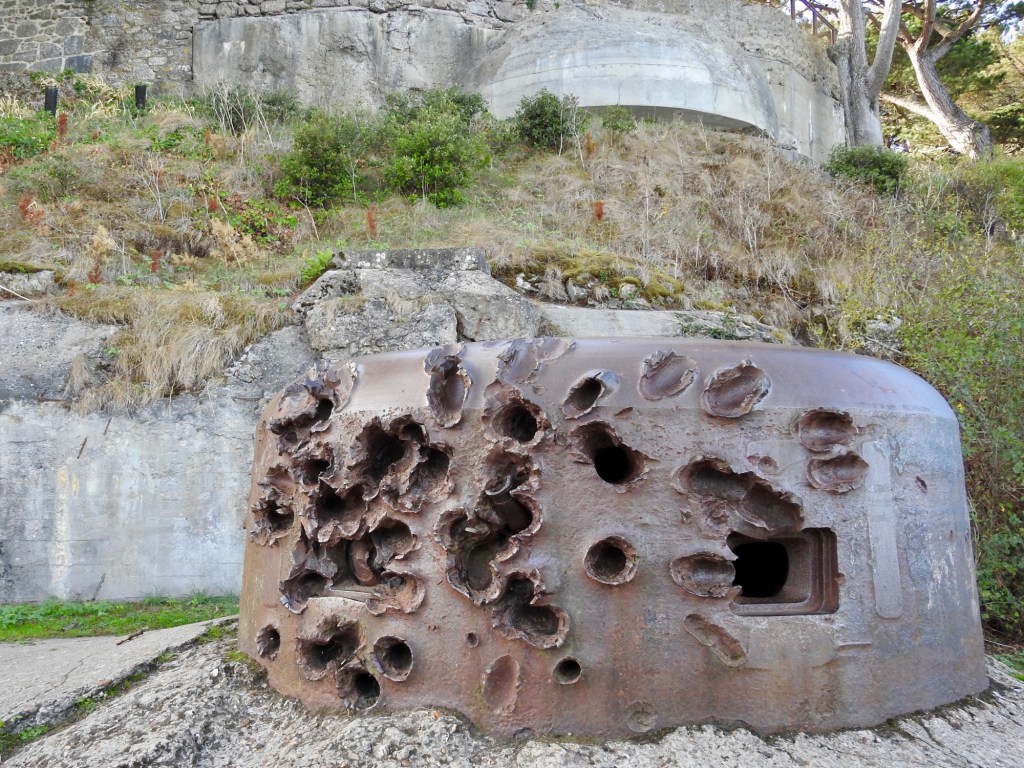
In June 1940, German troops occupied Saint-Malo and built an extensive network of defences, pillboxes, and reinforced bunkers. In early August 1944, the United States Army, backed by Free French and British forces, attacked the town to dislodge the Germans. Heavy artillery and air bombardments, turned the walled city of Saint-Malo into a raging inferno. About 80% of the historic old town’s buildings were destroyed and countless lives were lost. Even now, 82 years after the battle, evidence of the conflict is everywhere and inescapable. Our municipal campground sits among former gun emplacements, pillboxes, fortifications and a WW2 museum. You can still find bullets and shells buried in the walls. It’s unsettling to be bedding down where people have died in battle.
Today, Saint Malo is a prosperous summertime tourist town, known for fishing, sailing, its food, climate, and culture. The Breton people are fiercely proud of their Celtic origins, sharing cultural links, language and sensibility with the Welsh, Cornish, Irish, and other Celtic peoples, describing themselves as “Breton first, English second, and if there’s anything left over, French”.
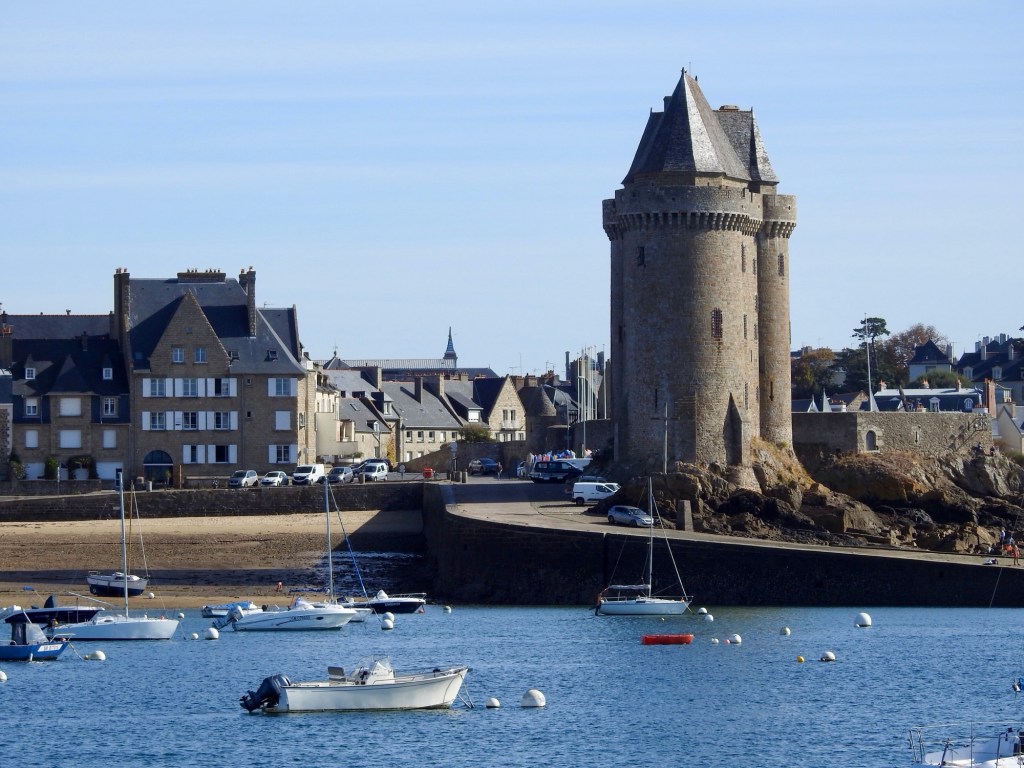
Under piercing blue skies, we spend a few lazy days in and around Saint Malo and Dinan, exploring the many inlets, coves, islands, and beaches on foot, by bicycle, and by pleasure boat, in sparkling autumnal conditions. It’s late September and the holiday season is coming to an end in France. Camping grounds are closing and some seasonal businesses have already closed.
We sit by the seawall eating ice cream, watching Black-headed Gulls and Ruddy Turnstones dart across the sand. We enjoy beach-combing at low tide walking to nearby islands, searching for sea glass, a message in a bottle or perhaps a pirate’s treasure of Spanish doubloons, but find only upturned spider crabs. On a sleepy warm evening, we cheer on animated locals kitted out in traditional black-and-white horizontally striped Breton shirts playing pétanque
It’s time to head east to Paris.




Leave a Reply