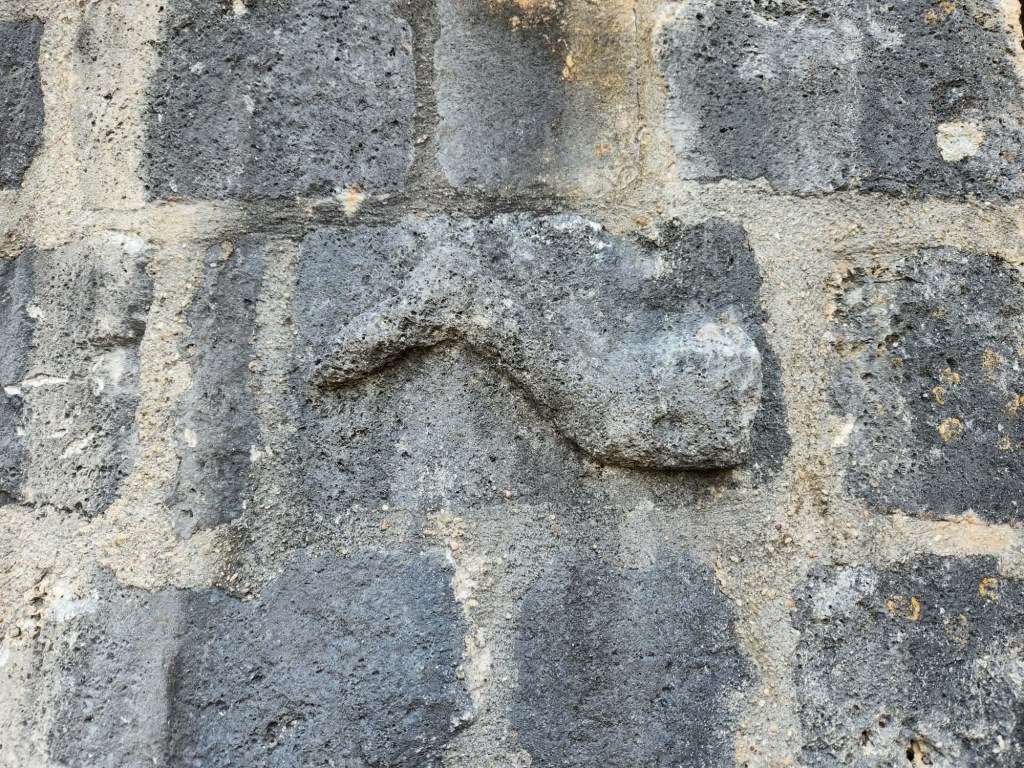
Camped by the gently flowing Charente River at the foot of the City of Angoulême, we climb slowly up the steep snaking, 3rd-century streets to the cathedral of Saint-Pierre, in search of the Leg of Clovis, which we gleefully find embedded in the ramparts of the original wall built to defend the old City. The Leg of Clovis is a stone sculpture of a human leg protubing from the masonry of the aptly named Clovis Tower. It commemorates King Clovis, who captured the City from the Visigoths in the year 508, losing his leg in the battle.
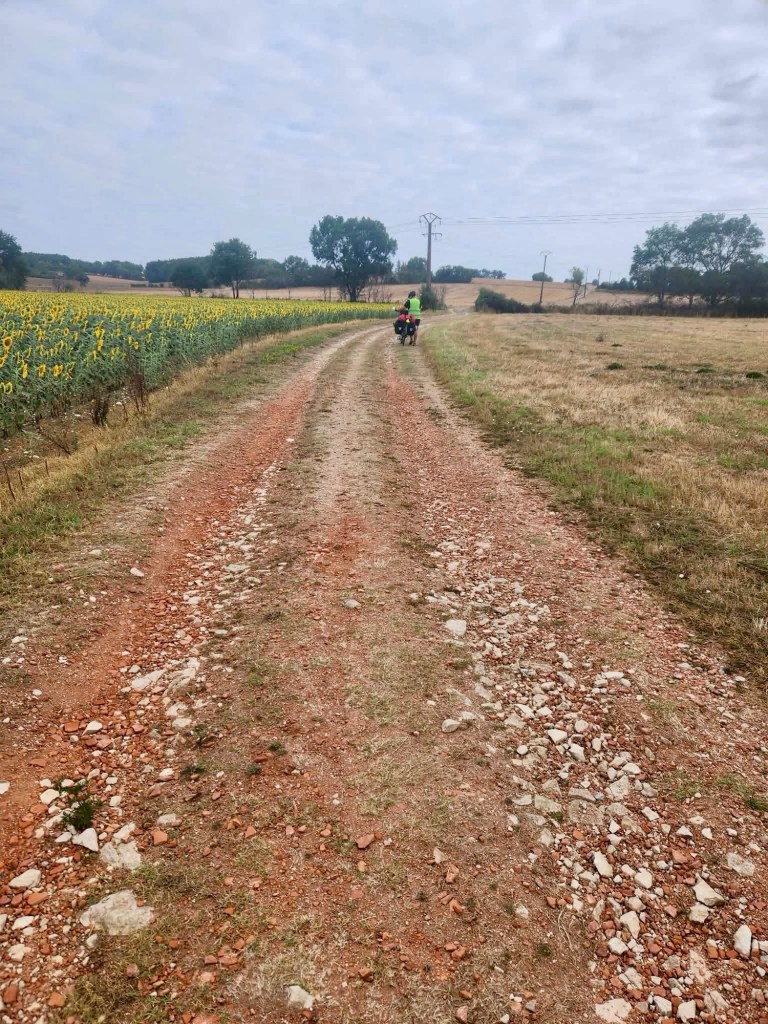
Cycling through the bucolic landscape of rural France, history is ever present, the very roads we ride follow the contours of the land. First walked by humans thousands of years ago, then later widened enough for a horse and cart to pass by, then bicycles and cars came to move over the same ground. The trail is sometimes paved, but often just a rough track bordered by hedgerows bursting with life. We eat our fill of sweet wild pears, juicy dark plums and ever-present blackberries. We are part of the landscape we roll through, feeling every sharp steep rise or exhilarating downhill run, being buffered by fragrant winds of eau de cologne mint, fennel, and freshly cut hay.
History here is visible, relatable, and physical. Many of the small medieval towns or settlements are no longer viable, crumbling before our eyes, inhabited by a smattering of elderly folk bound by a melancholic sense of place. An old man in faded clothes raking acorns in the yard, stops working to whisper ‘bon courage’, as we cycle past, while a donkey pokes its head through a glassless window frame of a long-lost home. Central France is emptying out.
Faded monuments to wars flourish by the crossroads on the edge of towns. Occasionally, we stop to read the names whilst brewing up a second coffee. Today, we stopped at the grave of an Englishman from the Hundred Years’ Wars, John Chandos 1320 – 1370 a 14th-century Knight of the Garter who because of his status was rewarded in death as he was in life.
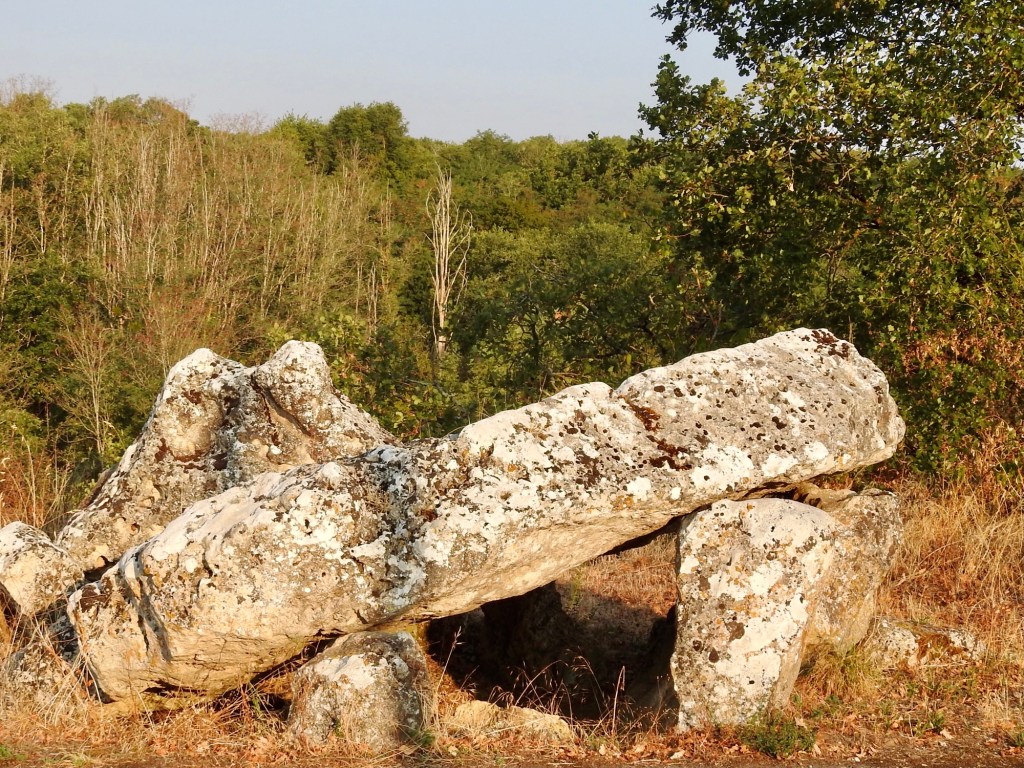
Cycling into Mazerolles, in the La Vienne River Valley, we come upon the Pierre Pese, a Neolithic rock monument dating back over 7000 years. Its use and meaning are speculated upon, perhaps a place of worship or sacrifice? In the last few hundred years, it was used as a shelter for livestock. However, recently, when the road was widened, the rocky slabs were realigned by the side of the road leaving them looking forlorn, but impressive once you are aware of their origin.
It’s another blistering hot day with temperatures in the low 40’s. We set the alarm for six to ensure we are on the road by seven, lowering our daily distance to not be riding in the heat of the day. We look out for campsites with a pool or at least a shady area to set up camp early. The logistics of cycling through a heatwave is harder than normal, but our early mornings are full of freshness, soft light and an infectious sweetness, even our bicycles seem to have a renewed energy, as we push further north cycling towards Tours and the beautiful Loire River.






Leave a Reply