
We holed up in Strasbourg for a couple of days waiting out the rain while walking this amazing City that celebrated its 2000th birthday in 1988. The imposing Gothic Cathédrale Notre-Dame-de-Strasbourg began construction over a thousand years ago and was eventually completed in 1439.
Strolling arm-in-arm through the Old City, Therese and I sample macarons and melt-in-your-mouth pain aux raisins and Croissants from various boulangeries. Sightseeing with other tourists, purchasing postcards or taking happy snaps.
One of the many interesting facts I learned about Strasbourg is that it was the site of the famed ‘Dancing Plague‘ of 1518, where in the space of a week hundreds of citizens in a state of hysteria inexplicably danced themselves to death.
Strasbourg is now home to the European Parliament
The European Union (EU) represents a genuine effort to integrate Europe after the destruction of World War II. In the hope that closer economic and social ties can help prevent future conflicts.
The UK voted to leave the EU in 2016, and while economic challenges and political and military differences have placed increased pressure on the stability and future of the EU, it seems to me at least to be a success.
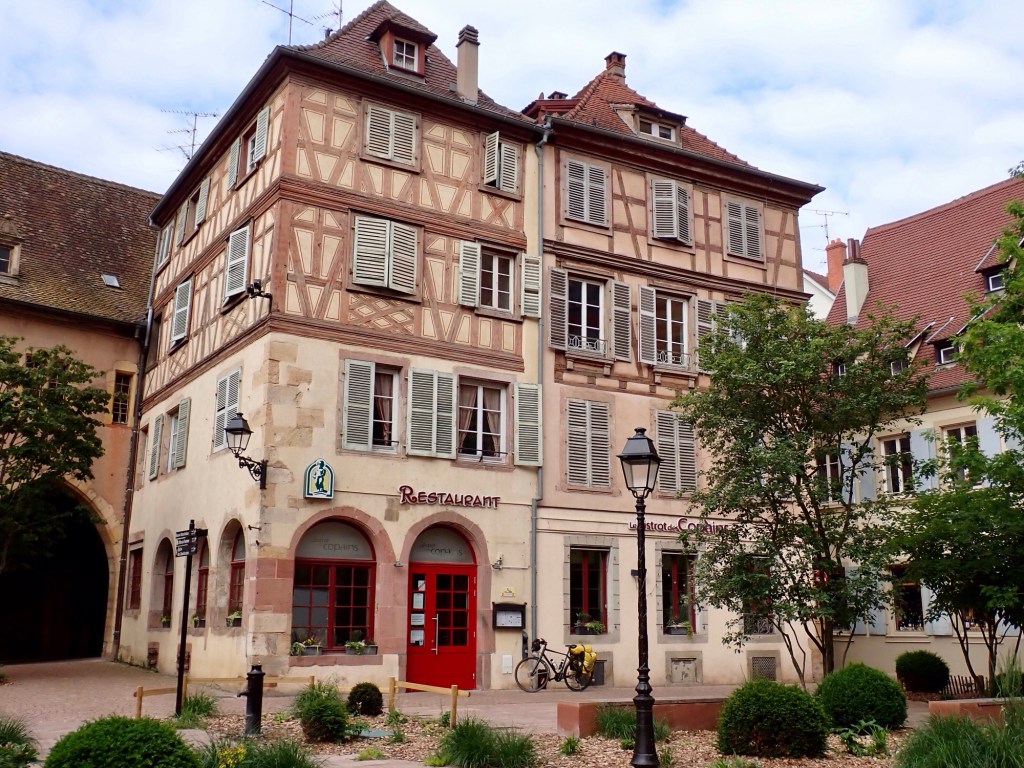
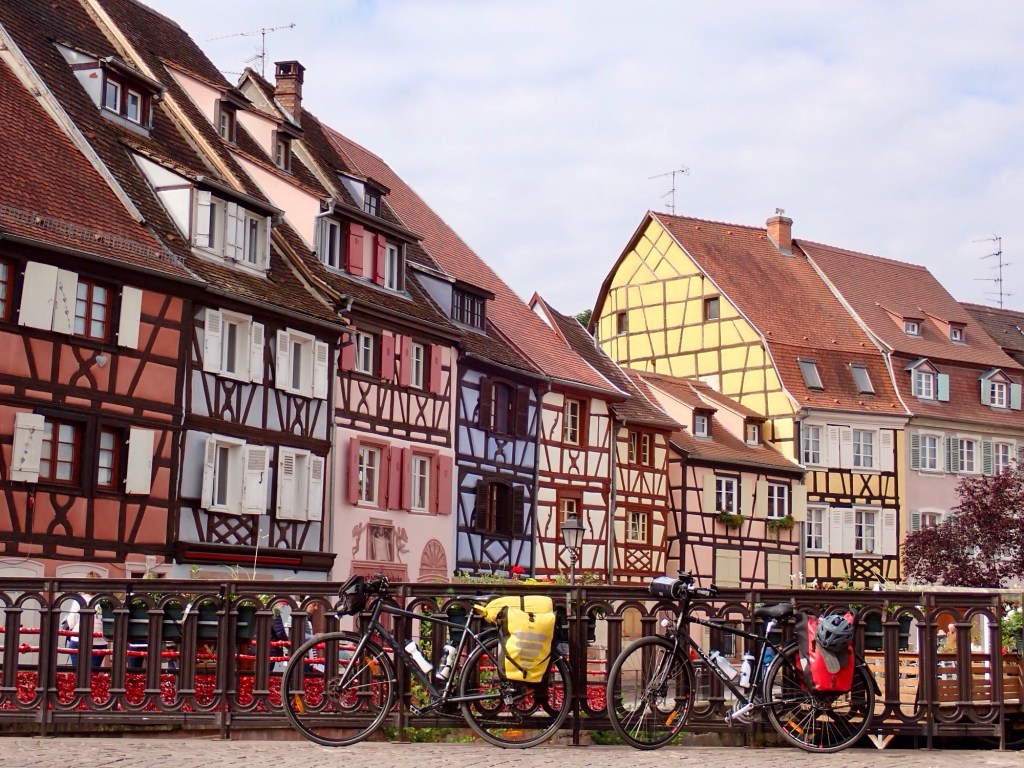
From Strasbourg, we travel on to Colmar, a 1200-year-old picturesque town with a quaint, fairytale aspect. We first cycled into Colmar nine years ago, where I was instantly captivated by its well-preserved medieval architecture and the natural beauty of the town.
It was a different story on the 2nd of February 1945 to the southwest of Colmar in an area known as the ‘Colmar Pocket’. The German Nineteenth Army faced off against the U.S. 6th Army who were supported by the French First Army. The battle raged for 3 weeks and killed at least 45,000 men. Nineteen-year-old Audie Murphy was awarded the American Medal of Honour for his actions in the battle then went on to become a famous Hollywood movie star playing himself in the movie To Hell and Back.
Historically, Europe is one big battlefield littered with cemeteries. Old conflicts are big business, battlefield tourism is an important part of many local economies.
We pass many monuments to the fallen allied troops who gave their lives during the battles of WW1 and WW2. There are no WW2 monuments visible for the Axis powers, for good reason, nobody wishes to memorialise a fascist ideology. In Koblenz, we did discover a memorial to the Victims of National Socialism from 1933 to 1945 at http://www.mahnmalkoblenz.de. Just ordinary people, many of whom were Jews, Communists and Jehovah’s Witnesses.
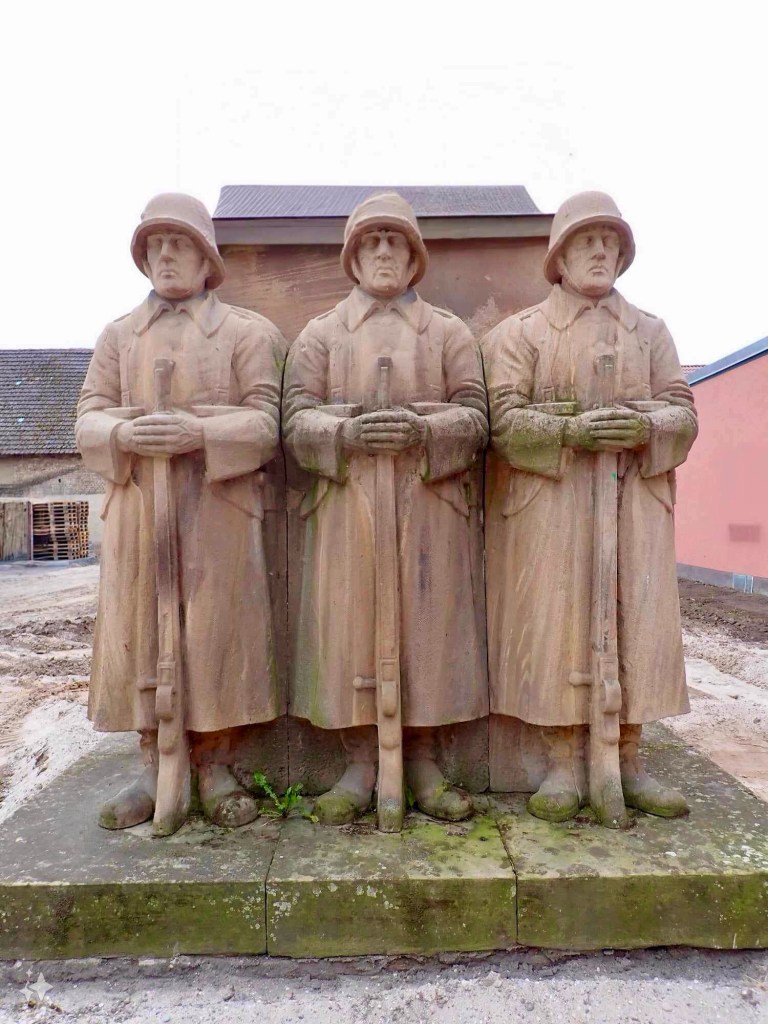
At the small village of Nuehofen in Germany we come across a WW1 memorial to the young men of the area who marched off never to return. After meeting the Canadian Army at Vimy Ridge in April 1917, a horrible encounter that saw 10’s of thousands of young men on both sides killed or wounded the battle resulted in a crushing victory for the Canadians.
We ride past sections of the old French defensive positions along the Maginot line, bunkers and fortifications now reclaimed by nature and smeared in anti-war graffiti.
I don’t sense an appetite for conflict in the mood of the people despite the seemingly endless talk of war and military matters from the political class.
It’s quite simple there’s only one race the human race.
Peace Out!





 Cycle Touring Australia and Beyond
Leave a comment